Done and Dusted!

Well, i cannot believe i finished my first unit! I cannot tell you how much this means to me! I feel like this term has been a whirlwind of emotion, between my gall bladder issues and sick kids, i am in disbelief that i managed to submit things on time! I am a little disappointed within myself that i didn’t manage to give or receive feedback for Step #10, but i have to focus on the good and appreciate the hard work i have put in. I hope you are all feeling proud of yourselves. Without all of the help you have given me, i would never have finished, let alone understood half of what i was writing! I am so thankful to have chosen this unit for my first. It has eased me into Uni and i have had the pleasure of meeting some great people that are willing to help! Best of luck to you all! Might see you around!

Steps #7 to #10

Step #7 – Identifying Products/Services

Firstly, my company is Australian Vintage Limited. I don’t naturally like to guess things in my life, so I second guessed myself a lot in this process. I have chosen 3 separate bands of wine that AVL sell to be my products. To work out the cost of each case (x6 bottles), I have chosen to work out the average price per case from the price lists on the ‘Dan Murphy’s’ and ‘BWS’ websites.

Brand/Product Dan Murphy’s BWS Average cost per case
(x6 bottles)
McGuigan – Black Label
Moscato
$ 35.40/case
(x6 bottles)
$ 48.00 case
(x6 bottles)
$ 41.70/case
(x6 bottles)
Tempus Two – Merlot $ 65.40/case
(x6 bottles)
$ 90.00/case
(x6 bottles)
$ 77.70/case
(x6 bottles)
Nepenthe – Sauvignon Blanc $ 83.40/case
(x6 bottles)
$ 144/case
(x6 bottles)
$ 113.70/case
(x6 bottles)

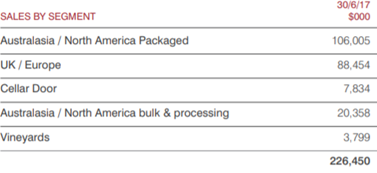
From there, I went on to ‘guesstimate’ my sales and variable costs. I scaled my financial statements and found the figure below, stating the Total wines sales for 2017 was $226,450,000.00. With such big numbers I chose to work out the sales and variable costs to a weekly figure.

I chose to set my variable costs to 60% of the sales, as there are so many variable costs to account for in my company. Electricity, direct labour, materials, ingredients, grapes etc. I also averaged out the total wine sales for 2017 into sold cases per week at 10,000 cases. I have no idea if this was what I was meant to do but it seemed right from what I have read.

Brand/
Product
Average Cost
per Case
(x6 bottles)
Weekly Sales
(x10,000 cases sold)
Variable Costs (at 60%) Contribution
Margin
McGuigan–Black Label Moscato $ 41.70   $ 417,000.00 $ 250,200.00 $ 166,800.00
Tempus Two –
Merlot
$ 77.70 $ 777,000.00 $ 466,200.00 $ 310,800.00
Nepenthe –
Sauvignon Blanc
$ 113.70 $ 1,137,000.00 $ 682,200.00 $ 454,800.00
Total $ 233.10 $ 2,331,000.00 $ 1,398,600.00 $ 932,400.00

It is obvious to me that the CB Margins of my 3 products vary as they are all such different types of wine and would have a broad range of consumers. All 3 wines are significantly different in the way that they taste and although I love a glass of Moscato as I can always rely on it being cheap, a nice bottle of Sauvignon would be a nice treat and still quite affordable. This is why it is important to have a range of brands in my company, as the consumers are not all going to want the same. I highly dislike red wine, so if AVL only sold it because it had the highest CM, I personally would never buy anything from them.

 Constraints

I believe AVL have many constraints within their company. After going through the financials again I read that in 2017 because of lower grape costs, sales were impacted. Other factors to consider were cool weather conditions, which delayed ripening dates, rainfall, moisture levels, temperature increases and temperature decreases. Before having AVL as my company, I would have never thought of ‘hanging time’ for fruit being important to get the best tasting wine, and having natural rainfall, rather than irrigation. It was quite interesting.

Another step down and more learning done! I’m actually feeling quite confident for now but up come the RATIOS!!!

Step #8 – Ratios!!

Holy Moly! That was intense! But so interesting! I never thought there would be so many ways to look at how a firm works. I also never thought I would get so excited about doing spreadsheets. Ha-ha. I will do my best to break apart my company and explain how I make sense of my ratios.

Profitability Ratios

Starting with my profitability Ratios, I notice that in 2016 there was a loss. I remember that this was the year that AVL had a few issues and this loss should and has shown all throughout the ratios for 2016. There was a vineyard lease exit, some losses and an adjustment made for the restated financials in this period. I can see that this has had a massive effect on the financials. I see that the Net profit margin is substantially higher than the ROA. If ROA means to basically earn more money on less investment then this tells me that it because the figures show a decrease from 4.7% to 2.0% over the last 4 years, this is not good.

Efficiency Ratios

When looking at the efficiency ratios, this tells me that its roughly around the 300-400 to convert inventory into sales. I do wonder why this is. I can only put this down to a big drop in sales from what I can see. In regard to the total asset turnover ratio, the spreadsheet tells me that they’re only making 13-14 cents for each dollar of assets. My first initial thoughts were “that’s crap”, but when looking at other spreadsheets, this doesn’t seem too bad. I don’t believe this gives me a very good insight into the company and wonder if maybe the have over invested in assets to have this result.

Liquidity Ratios

When comparing current assets to liabilities in AVL, I can see that my company has a decline in its ratios over the 4-year period, but the numbers show that it would have no issue paying out its debt with its assets. When comparing my company to others, I can see that most companies I have looked at are sitting between 1 and 2, but mine are between 3 and 4. Which to me is great!

Financial Structure Ratios

I see that AVL has quite a high Debt/Equity Ratio. I am still not sure if this Is a good thing or not. My understanding is that as long as the equity ratio is greater than the debt ratio, this is a good thing. But at 48.4% I believe this is quite a high ratio and is quite risky for the company.

Market Ratios

I believe that AVL has quite a high Earnings per share compared to other companies I have studied. Its decreased dramatically though, and as stated before the issues in 2016 that the company had reflects again having a negative earning for that year. I am quite impressed though on how much they payout on the dividends. it shows that there were no dividends paid in the 2016 period due to the vineyard lease exit, losses and adjustments made. My understanding of price earning ratios are that these are the figures that state what the company earns per share compared to the market price per share. This figure has actually gone up over the 4-year period and the only figures to go up. These figures are a good indicator on whether stock is undervalued or overvalued.

Ratios Based on Reformulated Financial Statements

Well looking at my figures, a return on equity of 3.55% going down to 1.34% isn’t good. This to me shows that AVL is not using its investments well to create its earnings. Again, going from 4.03% down to 1.87%, the RNOA is not returning a good profit from its assets either. When comparing this to ROA, the figures are quite similar. In regard to the Net Borrowing costs, the interest rate seems to have gone down over the years from 5.23% to 3.68%. This shows me that the company is paying off its debt and I assume this is a variable rate. Even thought the profit margin seems to decline over the years, it is still a positive number. When comparing these figures to the Net profit margin, they are almost half! When looking at the Asset turnover, I see that its sitting roughly at 0.6 but it has gone up over the period so this is good news. This means that the assets are starting to make money rather than losing it. When I compare this to Total asset turnover ratio, these figures are more than double.

Economic Profit

My figures for AVL’s Economic Profit are at a massive loss. I am still trying to understand this part but my understanding of this is that these figures are the difference between what the sales could have been and what they actually were. They include the opportunity costs into the figures. This snip below is what I found to explain this to me the way that I can understand it.

“An investor starts her own business with $100,000 and earns $120,000 in profits during the first year. Her accounting profit is $20,000. But that same year, she could have earned an income of $45,000 working as an employee for ABC Corporation. The investor’s economic profit for the year is actually a loss of $25,000. Economic profit often determines whether a firm should enter or exit a market. It’s used to calculate total production costs and to assess a company’s total value.”

If I was to go by these figures, I would not be feeling very confident within my business. I am unsure as to why my Economic profit is such a big loss. It hasn’t changed a lot of the 4-year period but when comparing to other people’s financials, mine seems to be the biggest loss I have found so far. I went looking for my own companies WACC and I thought I may have found it but wasn’t 100% sure so I just stuck with the 10%.

If the above image of what I found was correct it would make a huge difference to my companies Economic Profit and it would be as follows:

  2017 2016 2015 2014
Economic Profit -$9,095.62 -$13,498.88 -$6,513.24 -$5,811.08
  4.32% 4.24% 4.97 5.47

Attached is a copy of my spreadsheets which include my ratios, NPV & IRR’s.

Step #9 – Capital Investment decisions using Payback, NPV and IRR

Australian Vintage Limited is considering investing in a new Vineyard. After viewing the vineyards for sale on realeastate.com.au, we have narrowed our options down to two Vineyards – Krinklewood Vineyard in NSW and Gannawarra Vineyard in Victoria. Due to high demand of wine sales, we are looking to expand our services to other states in Australia and cater to our more rural clientele. We expect to have a business life expectancy of up to 8 years before selling the property to make a profit.

In my opinion, I would invest my capital into the Krinklewood Vineyard. I forecast an NPV of 20.85 million over an 8-year period, with a 33.8% Internal rate of return. The Payback Period would be in approx. 3 years and 9 months, or 3 years and 273 days.

The investment would be made on 31 December 2018 and the estimated future cash flows are expected to be received on 31 December each year.

The table below states the original costs, Estimated useful life expectancy, residual value and estimated cash flows for both properties. All amounts are shown in millions Australian dollars AUD. Assuming a rate of return/discount/WACC of 10%.

Step #10 – Final Feedback!!

Unfortunately, I have run out of time and not managed to provide or receive feedback. I did go through other students Steps 7-9 and compare our companies and found this very helpful, but with surgery and a few complications this week, I have only just managed to submit what I have. As disappointed I am within myself I know I have tried my best and can only hope for the best. Thank you to everyone that has offered me help and taken the time to read my work. Thank you to Martin, Danielle and Maria for all of your knowledge, and caring approaches to me throughout this term. I appreciate the help more than you can imagine. Thanks to Paul Feasey for all of his assistance, I am sure he would be worn out from all of the extra help he has offered, but I would not have made it through without his input as I’m sure others can agree. I am so happy to have had this unit as my first step into University as an older distance student. The interaction between students and lecturers has made this scary and daunting experience, a fun and memorable one. I have learnt how to learn properly!! Considering I never thought I could retain any information when I started and have met some awesome people. Thank you!! I look forward to moving onto the next unit with a lot more confidence because of you all!!! Best of luck!

References

https://www.investopedia.com/video/play/economic-profit/

I see the light!!!

tunnel-trainWell I have finally submitted my Step #6 and I am now starting to freak out as to whether i am going to finish on time! I feel like i must be the only one just starting Steps 7-10 and have no idea whether i have learnt enough to pull me through. I am being as positive as i can and trying my best, so i guess that is all i can do. I have had a few struggles this fortnight. Same old gall bladder issues, i had to go away for work which was remote, (limited service) and to top it all off my 5 year old son had a pretty bad asthma attack. We are back on top now, and i am due to have my gall bladder removed at 7:00am in the morning so all i need to do now is tackle the remainder of my assessment and hope for the best! Although i am panicking a little, i am really thankful that this was the first module i picked to start off my uni journey. With all of the excellent resources we have access to, the great lecturers and Pass sessions, these have all helped me gain the confidence to continue. I have read back through my work from when i first started and even though its only been 11 weeks, i feel as though i have already come so far and met some pretty awesome people. I cant wait to move forward and utilise the skills i have already gained. Best of luck to you all in your grading process!! And thank you to all the people that have helped me along the way. I would not be here without you!!

Step #6 – Chapter 8 – We have go to make some decisions

how to make a budget

To manage of any firm or business, I understand it is extremely important to make good decisions. In order for us to make these good decisions, there are many factors that come into play. Analysing our firms’ financial statements, fixed and variable costs, overheads and any relevant costs, (any costs and benefits that change because of decisions being made), just to name a few.

Something that stood out to me in this final chapter in the beginning was “Sunk Costs”. I have never heard this term before, but I do understand this to be costs that have incurred by past decisions. A cost that you have committed to and cannot avoid paying in the future. For example, in my workplace, last year my employer signed up with a business called “Employsure”. These guys basically are there for our firm to assist with any employment relations, WH&S, Compliance, Professional advice, Legal representation and legal protection. We recommend them to our clients to assist them in their businesses and so on. My employer signed up in a 5-year contract, which makes this a sunk cost. I personally don’t like committing to anything over 1 to 2 years, but hey, I’m not the boss! So basically, this would not be a relevant cost because no matter what decisions and changes are made this cost is fixed, locked in and won’t change. These are costs that cannot be recovered.

Opportunity Costs

The way I understand an opportunity cost is it is the system of working out the maximum amount of time/cost that you cannot use as a result of decisions you make. For example, my husband works in the mines. Whilst he misses out on more “quality of life” at home with sports events and birthdays without our kids, he earns more money to accommodate this as he works away. Or if I was to choose to study full time and not work, the opportunity cost would be the wages I missed out on for that period of time.

Replacement Costs

My understanding of a replacement costs is the costs to replace an asset you already have with the most similar replacement you can find. For example, if my house was to burn down today, the replacement cost would be the cost to replace my home itself at its current market price. Because I already own the land, this doesn’t play part in the cost of replacing the home. Eg. We bought our home for $360,000.00. $80,000.00 of that was the land price. If it burnt down, the replacement costs may be 280,000.00 as the land doesn’t need to be replaced and we already own it. This is a relevant cost to consider. In a firm, this may be machinery or can relate to any asset.

Contribution

Contribution to me means when you add something to gain something. In our house, if we all contribute our time to cleaning and tidying and keeping on top of all of our jobs, we gain time to spend on other things we actually enjoy doing. In a business I would see this as product or stock and if it is contributing to the profit and growth of the business. When I worked at Optus, I had the fun job of ordering our accessories for the store. Being a small country town, when I ordered glittery and fancy accessories, we wouldn’t sell as much as people in our town wanted sturdy and practical accessories to protect their phones, rather than make them look pretty. So, these weren’t really contributing to the profit as they would sit on the shelf for months and then we would end up selling them off cheap to get rid of them, potentially losing money in the process. Focusing on the Contribution Margins as a manager would help make better decisions within the business.

I also can see the two different ways that help make these decisions. (constraints). I found it quite interesting the way that Martin laid out the Robinhood product mix and I found it helpful while trying to wrap my head around the concept. Its clear to me that CM = S – VC and looking at the contribution margin from different angles helps give you a better look at what decisions need to be made when choosing product. Without breaking the costs down into the market demand, steel required, volume and sales value, it would have been hard to know whether it’s even worthwhile making the product within the business or just outsourcing the production process.

Long Term decisions – What is Time Value of Money?

I understand time value of money to be having money right now as it is more valuable than having it in the future. Having money in my hand right now is more valuable to me as I don’t know what the future brings, and I can’t rely on the same amount of money next month or year. It would be the same for when investing money or interest on our home loans. Because of this uncertainty, I was unsure how I would be able to predict the future of money when it comes to making decisions within a business/firm.

APR

Let me break this down so I can understand it. Using Singapore Airlines as my example, I work out the average net profit (average of 3 years) and divide this by how much the plane was purchased for and work out its percentage and basically pick which plane to buy on the figures showing which one has a higher percentage return. Seems simple enough. In regard to the payback period, I can understand that you have to work out how long it would take to pay back the investment and not be paying interest anymore. As this figure isn’t certain this is the risk I guess when purchasing the plane. I would think that the goal would be to fix the interest and try to pay it off faster than expected. (I do this with our home and car loans. I’m not sure if this is the case here, but that makes sense to me, ha-ha.) So, the higher the cash flow, the quicker I pay off the debt.  (Initial Investment divided by Cash Flow.)

Payback period

I would have to use past financials to help forecast the cash flow, but I see this being the most effective way of predicting the payback period. This to me is still risky and as you still can’t predict your future 100% and I am curious to read on.

Discounting Cash Flow

I understand that to predict the future, assuming that our dollar will be less as time goes by, we would have to make allowances for this and take this into consideration when making decisions within the business.  I like Martin’s $2 coffee example, reducing the worth of the dollar by 10% each year, the coffee in 40 years would potentially have no value.  The next part of the chapter in relation to the Internal Rate of Return (IRR) and Net Present Value (NPV) has me super confused. I get closer to the end of this module and feel more confused than I started. I do wonder if I am the only one. Hopefully doing the ratios and watching Maria’s videos will clear this up for me better. Sometimes watching the text in play helps me to understand rather than reading it. Fingers crossed! I don’t like the part where managers have to do some ‘guess-work’, this makes me nervous when it comes to business. I am sure it will all piece together as I continue on. I do understand out of this chapter that there are various methods managers can use to make decisions and not just one simple way. Life happens, money changes and people change. There are short and long-term decisions to make and everything has an effect.

I hope to gain a better and clearer understanding of what this chapter means with the final steps of my Financial Statements. I may be more comfortable with my reading but still feel like a fish out of water.

Step #5 – Chapter 7 – Budget for the Short Term

Reasons for budgetingbudget

While I can think of many reasons to budget, my life as a busy mum, (full time work, uni, sport practice, gym and normal house duties I won’t list as I would be here forever!), is All ABOUT THAT BUDGET! Without our family budget we would not survive! Kids are so expensive and with a FIFO husband that I am forever trying to find cheap flights for, some weeks its down to that fine line, even with the budget in place. Planning ahead is a must in our home, or bills would never get paid and let’s be honest we just wouldn’t eat. (No, I am not a drama queen, I AM SERIOUS! CALL 911!)

I have broken down all of our bills into weekly costs (electricity, house repayments, car repayment, insurance, phone, internet etc) and I set up direct debits weekly for all of the bills that I can, so they are paid before the actual bills come in. I have to allocate money for the kids’ pocket money and rainy days, and always have to make sure there’s a some left aside for taxis or ubers for my husband to travel to and from the airports.

When I am thinking of how this relates to managing a business, I understand managers have the same roles to play as us, but with different things. We need to motivate, plan, co-ordinate and delegate to ensure whatever needs doing is getting done by the right people. This saves us time and money and when putting trust in the right people, we know it gets done right the first time. (I would much prefer my 17-year-old to be wipper snipping the yard over my 5-year-old. This saves us time, medical costs and a new wipper snipper). In our house, a big lesson we teach is that time is money. As parents, we know we are raising these beautiful children to walk out on their own one day and know how to get by. Not only in their personal lives but in the workforce. My 17-year-old has a school-based traineeship with a plumbing retailer in town and he is now experiencing our lessons first hand and has thanked us for teaching him to be reliable, trustworthy, to think ahead and to speak up when needed.

When I think of preparing budgets in our family, I would say my husband is the managing director, (he likes to tell me where to spend the money), and I am the managing director. I actually see where our money goes and what needs to be done and paid, first hand. You see, we don’t want to be living week to week forever, and like any business, we have a long-term goal (strategic plan). Our board of directors would be his mum and my dad, as we need advice and mediation sometimes, but at the end of the day if we don’t trust each other and get in to get the job done, we will never succeed and move forward.

I like the sentence The major benefit of preparing budgets is that they represent a future virtual world for a firm.”

I am always saying to my husband, “just visualise where we will be in 5 years’ time if we go without”, when he doesn’t like to be told no sometimes. Just as much as I hate saying no.

Delegation

This is an area of the chapter that stood out to me. When I was managing at Payless Shoes, I liked to have everything in its place, perfectly lined on the shelves, all tags front facing and for the first 2 years I thought the only way this would get done right was if I just done it myself. This became quite a painful process that I struggled with as I found myself staying back really late to try and manage my staff, customers and all of my other jobs. I came to the conclusion that I had to start delegating my jobs. Yes it took me extra time to teach my staff how I wanted it done, (I used to race them to see who could tidy a shelf the fastest), but in the end I trusted my staff and my teaching and had more time to finish up my other jobs in the store and get home to my family at a decent hour.

In my current role in the office, my employer is so busy, she doesn’t have time to be covering everything that goes on in the firm on her own. That is why she hired me! The “Office Manager!” This label covers a lot of roles in our workplace and can be quite overwhelming at times, but I do like a challenge. If I don’t have time to get everything done, I will pass on some time-consuming jobs to other staff that I know can do them and do them efficiently.

Every month, to keep track of how our staff are performing and if we are all being productive, I do a productivity report. I work out all of the hours we have worked for the month per staff member, (Total staff hours worked – TSHW), divide this into how many hours we have allocated to specific jobs (Productive Billable Hours – PBH) and work out our Productivity as a percentage.

% = PBH/TSHW

Staff performance %

This is a great tool for us to discuss what we do with our unproductive time individually and how we can work to reach our percentage targets and be more efficient. All of this depends on what our roles are also. I do a lot of admin work and there’s no specific admin role to allocate time to, so my percentage target would be 50%, whereas, our accountants targets sit at 85-90% and our employers goal is to sit at around 70%.

I also do an hourly rate report. This helps us gauge how to quote our clients for the work that we plan to do and to see how much time we spend n specific jobs. The way I do this is by working out our Total Sales for the month (TPIR) and divide it by the Total Staff Productive Billable Hours that we have worked (TPBH) and divide that by 1.1. (GST)

TPIR/TPBH/1.1= Staff Hourly Rate

Staff hourly Rate

Sales and Production Budgets

Usually when I am reading a chapter, I will write notes and break down the paragraphs how I can understand them. I am normally a ‘hands on” learner’, rather than a ‘read and learn’ type of person so I am still struggling with some KCQ’s as in some cases I don’t understand what I am reading. In regard to sales and production and trying to relate to it is hard for me to put into words.

I understand that Opening inventory is the product a business already has at the start of a period and Production is how much product is made in that period and if you add these together it will be altogether what the business has to sell. Sales plus closing inventory is where the product is at the end of that period. (whether its sold or left at the warehouse etc) It is obvious to me that the Production and Opening Inventory has to be quite similar to Sales and Closing inventory as if you don’t have enough stock in the budget compared to what you plan to sell then you won’t make money and you won’t please the customers and its bad for business.

My first ever job when I was 15 was at a little noodle shop in my local town. I worked there every Friday and Saturday night and I knew business wasn’t great there as I live in a small town, but I was so excited to have my first job, so I didn’t really care that I may not be there for long. I quickly realised why business wasn’t so great. My manager/owner was all over the place, always complaining about not having enough money coming in or enough money to buy more ingredients and would panic if we got too busy. He was rude and would complain to customers and would have a smoke break every 15 minutes. I rarely got paid on time and the fact that I worked on weekends made it worse as he would stress even more because we were always run off our feet. So, when we ran out of lettuce, chicken and noodles by Saturday night almost every weekend, we were turning customers away and things went south quite quickly. The business ended up closing down. This is a perfect example of poor management and budgeting skills. If he had just planned ahead instead of taking the risk, he would have been able to serve the extra customers that we turned away and made hid money back on what he wasn’t willing to put into the business in the first place. We had no targets or goals set in place, no action plans or any ideas on what we could do to turn the business around. I was so disappointed because the food was great and if I, at 15, can see the issue and know how to fix it, why couldn’t he? Maybe if he had someone else that didn’t lack the motivation to help run the business things would have been different. Who knows?

Cash Budgets

I see the importance of having a cash budget and how it’s effective. When I am doing my family budget, I start with all incoming payments that we get, (my wages + my husband’s wages), and then break down all of our outgoing payments. (Bills, food, fuel etc) I know that all of our basic expenses come to $1250 per week and that is not including any surprises that come our way. (like our hot water system blowing up in the first month after we bought our house!) So, we try to allocate $50 a week to our ‘Holy Sh#t account’. Unless we have something jump up and surprise us, I can usually predict how much cash we will have leftover and for the coming months. This is always changing with work and children, so I redo my budget monthly to keep us on track. Whatever we are left with at the end of the month I transfer in our savings account and start again. We don’t have an overdraft or risk having any credit cards, (I was a turd teenager and learnt the hard way by going bankrupt for 8 years), so our savings is what rely on, so we never have to dig ourselves out of a big hole again.

Budgeted Income Statements

Which one should we believe? I am not fully understanding why there is such a big difference between the Net Profit and the Closing Cash Sales. If I was going to pick one to go by I would have to look at the balance sheets also, but I would initially pick the Income Statements, as the Cash Budgets don’t accommodate the Timing Lags. I can’t see when the sales were made and actually received or when the costs occurred. This is hard for me as I am not a big gambler and a lot of the budgets are guessing and not accommodating for something to go wrong.

Budgeted Balance Sheets

Now, after looking at all 3 spreadsheets, I understand that you really need all 3 to be able to more accurately forecast the future of the business. Once you add all of the assets, liabilities and equity into the mix, its clearer where the difference between the Cash Budget and Budgeted Income Statement is. Without considering all aspects of incoming and outgoing you cannot get a clear understanding of what’s ahead of you. For example, If I had $50 leftover at the end of the week after paying all of my bills due that week, it would be silly not to think ahead about my rego that may be due the next week that’s not in my budget. You have to have a set period, budget and plan in place to be prepared for what’s coming up and to have a clearer understanding of what money you actually have in your pocket.

Measuring Performance

In the time that I was managing ‘Payless Shoes’, we had a few teenagers that worked there before I started to manage. When I took over, I found it difficult to get them out of the routines that they were set in and bring a more positive vibe into the business. As we were selling shoes to a broad range of customers, (kids, elderly, business people), we had to have open and inviting personalities to engage with our customers and genuinely help them find what they need to fit their budget. Oh, and we wanted them to come back of course! These teenage girls were there a few afternoons a week and they would stand in the furthest aisle while their friends would come in and talk before I had to step up and do something about. I am not great with confrontation, due to my colourful past, so getting cranky and setting the negative vibe in the shop was not what I wanted. So, I thought I would create a performance appraisal. I set out a four-page booklet, with questions on one side, a section for their answers next to it and then a comments section next to that for me. I would get all of the staff to fill one out every month and I would have questions like: Rate yourself from 1-10 on your customer service and what are your strengths and weakness? But then I would ask them to rate me also. After reading their comments we would work out a strategic plan to get them to where they wanted to be, and I would also get some feedback on how I was doing. It got me results and we were all learning together. One of the girls suggested a chocolate jar for the first person to make their targets for the week, so they were starting to motivate each other. They also noticed that our sales were increasing because our customers were actually getting the attention they needed for a change and not turning around and walking out. If I made bonus for the quarter, instead of me keeping it to myself and not telling anyone, I took them all out for dinner with that money and congratulated us all as we were a team. I did have to let one girl go. The first and only time I had to fire someone, and as awful as it was, I tried everything in the book and retail just wasn’t for her. I don’t believe businesses are purely based around money, its all about the people in the business, how well they work together, how well they communicate and whether everyone has the same goals and future for the business in mind.

Conclusion

I enjoyed this chapter a lot, as not only have I read and understood most of the different budgets that come into play to work out how to budget for the short term, I realise its more about the people in the business , the decisions people make and how they plan, motivate, delegate and give themselves the ability to foresee any future issues that may be coming their way before its too late.

Finally an early Sunday night!!

Well its only the end of week 8 and i have managed to submit an assessment before midnight!!! I know, i know, it was only 7 minutes but hey, this is a start. Although i did find this the hardest part of this assessment so far, i really enjoyed the challenge and attempting to help others, helped me understand more, which i guess is the goal. I have also only had one gall bladder attack this week too, so i found i had a little more time on my hands to study. Just imagine what i will be doing with my time once it is out! I cannot wait. 8 weeks maximum! I hope everyone else does well with their Financials, i have seen a lot of questions flying around Facebook asking for help, (one of them being myself), and so many students putting their hands up. I really am loving this module so far.

Well i am off to bed!!!! (My favourite words) After a big mothers day with the kiddies, we have been to the movies to see Avengers and i have had breaky in bed and even got to have an uninterrupted nap! Things are looking up in our noisy house! Haha hope all you mummies and daddys-that-are mummies, had a great day. This is what we work so hard for – our families. On that note – Good Night peeps!!!

Step #4 – It’s Feedback time!

feedback

I love providing and receiving feedback from other students, as I get to see another person’s perspective and procedure in how their brain works compared to mine. Its great as there is always something I might not think about and learn from when I am reading others work and if I have the ability to help in any way that’s also good. I find this process so effective, especially after a few days of finishing my own statements, it’s a good refresher. I found that because other people’s companies are so different to mine, that the challenge to find errors and discrepancies was quite difficult, but a good process. The people I have exchanged feedback with are: Ethan Hennesey, Emillee Bagnall, and Erica Borer. Also, Paul Feasey provided me with feedback also.

So, thank you to everyone for all of the feedback and encouraging words! I know how time consuming it can be, especially for those juggling more than one subject. I really appreciate it as it always helps! Paul pointed out one line that I had formatted differently, and I hadn’t picked up on that and not sure how I did that, so a good reminder for me to double check every line as I go. I value the feedback while interacting with other students on Facebook and Blogs as we are working through our steps. I don’t think I would have figured out my issues with my restated income without this feedback.

I have attached the feedback I have provided and received below.

ASS#2 Peer Feedback Sheet Step 4 from Paul Feasey

ASS#2 Peer Feedback Sheet Step 4 from Emillee Bagnall

ASS#2 Peer Feedback Sheet Step 4 from Erica Borer

ASS#2 Peer Feedback Sheet Step 4 from Ethan Hennessey

ASS#2 Peer Feedback Sheet Step 4 For Erica Borer

ASS#2 Peer Feedback Sheet Step 4 For Ethan Hennessey

ASS#2 Peer Feedback Sheet Step 4 For Emillee Bagnall

Step #2 – Chapter 6 – Understanding key cost relationships

My understanding of key costs relationships is attaching costs to cost objects, tidying and organising your costs and allocating them to the different ‘departments’ they fit in. If you, as a manager, can understand the relationship of a firms cost compared to its various activities, you will have a better understanding of what is working and making a profit or what isn’t working and causing a loss. This gives you the ability to plan ahead and cut back on costs in one area that isn’t doing well to accommodate the areas n the business that are.

Initially as I started to read chapter 6, my first thoughts were how we allocate funds at work. We use a few different software programs that make this a little bit easier, like Xero and Hubdoc. Hubdoc is where our clients capture their spending’s on their phones or computers in which get allocated and coded by us to the different expenses/income categories that are pre-setup in Xero so when we need to have a look at where the company’s costs are its already in its ‘department’ for us to assess. As I read on this seems to be an accurate understanding, but it is broken up into more detail which was unknown territory to me.

I used to manage a shoe shop, before it went into receivership and when our figures were down, and we had lots of old stock sitting on the shelves, we would have our big sales. I mean these were ridiculous prices! We were selling tables of shoes between $5 and $9 and these were good quality shoes! There were so many factors that came into play while I was managing and although I did my job and I did it well, I never really understood how we ever made a profit on these shoes while we were selling them so cheap! I realise now that closing down stores and minimising our range allowed us to have more opportunity to generate sales by reducing prices. (obviously something went wrong for it to go into receivership, but you get where I am going) I guess selling the older stock at a cheaper price was better than having to write them all off and they would have had to have predicted the loss and account for that in their figures. I would love to go back and ask more questions now to understand where they went wrong a bit better. But I am learning.

What is a cost object?

I’ve read that it this is any aspect of a firm in which managers want to understand its costs in which they can be measured and assigned. Ok, so what are these aspects we speak of? I believe these are the different departments or sections that we divide the costs into, giving us a better understanding about how these costs are allocated and to help make decisions on whether to change these allocations or not. For example, how many different products to sell, whether to close a store that isn’t performing well and to help plan and forecast future costs and expenses. There are two types of costs involved in this and that is direct and indirect costs.

Direct Costs

I believe direct costs to be any cost that are usually a set cost, such as salaries and wages, materials and labour. These are costs we know are usually going to stay the same, so we can measure these costs comfortably. Then we have Indirect costs. Or Overheads.

Indirect Costs

Indirect costs are not as easy to measure as they are costs that can change, depending of sales, productivity and performance. Some examples of these costs would be maintenance, electricity and rates. Things that you can’t easily predict. I noted that the process for indirect costs is to calculate the average product costs across all of the different products at each stage of the production process. This is obviously going to depend of the cost of the job compared to the process costing itself.

Job Cost/Process Cost

Cost

chocolate

I am loving the chocolate factory examples as this really helped me understand the concept of when you divide the costs allocated to each process or department, by the volume or number of unites of chocolate (kg’s), you will get the average cost per kg.


direct costs.png

I found it interesting to read that in order to match your revenue and expenses, we don’t add the costs of products as an expense until they are sold. It makes sense to me as you would expense but no revenue to match it, but I didn’t clearly understand why it’s put in as an asset (inventory) when we don’t really know if it will be or not. This confused me a little. But I do see that it can be called ‘work in progress’ and only get added in when the product is sold. I see that this is where those grey areas enter. The assumptions and judgement calls.

When a company or firm is allocating indirect costs to products, I understand this can be really tricky and a manager would have to be very careful in the way they make their assumptions and judgements. There’re obvious indirect costs like rent on meeting rooms, staff functions etc, but there is such a high risk involved when making these judgement calls. It just goes to show how important it is for a manager to allocate its costs and specific as possible to avoid major losses. The way I see it is if you determine the overhead absorption rate at the beginning of the year for each department, you can apply this throughout the year. Obviously, you still have to be very careful how you do this in order to not to distort the level of activity. The way these assumptions are being determined is:


total ohead

oheads.png


Activity-Based Costing Systems (ABC)

ABC


Basically, any activity that consumes overheads are cost objects. I did a little more research as I really didn’t grasp this concept, or I didn’t know how to put my thoughts into words (I struggle with this a lot), And I read that cost objects are also known as cost drivers and these can be seen as maintenance, power, and inspections etc. Any cost involved in making the product. This can be hard to determine at a cost, but this is a more accurate attempt to connect indirect costs to functional based costing systems more specifically.


Absorption Costing

Also know as full costing, absorption costing is all direct and indirect costings to each product.

Variable Costing

This costing only attached variable costs to its products. Depnding on nthe sales and production, this cost varies. My understanding of this is if you sell more product your variable cost increases and vice versa. Absorption costing is more commonly used for external parties wanitng information but variable costing is also used if its just for internal use.


Some costs can be fixed costs (they don’t change with sales or production), and the other costs can be variable. When we’re talking about variable costs, these will vary depending on sales and activity and the best way to help understand your firm is to look at past relationships, figures and activities. This will help you make better decisions on where your firm sits and whether to make some changes to accommodate this. (price rises etc)


“Understanding relationships between costs and level activity of a firm.”


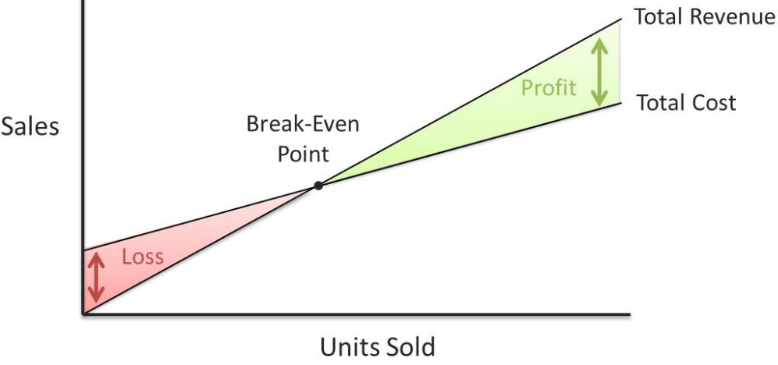
The main reason we do all of this is to have a better understanding of the risks we take in our businesses and to try and understand where we break even. If we can understand this better, we can understand the operational risk of a business before the risk becomes reality.

Contribution margin (CM)

CM.png

My understanding of the contribution margin is that it is the selling price per item minus the variable cost per item. Martin related his example of his sons music gigs, which I understood and if CM = Sales – Variable Costs then the Contribution Margin for the band would be the ticket cost per person ($5), minus the cut that the band agreed to pay the bar per person ($2) which left him $3 per ticket sold to cover any other expenses, leaving him a profit after these expenses were paid.


To work out the CM Ratio, you have to get the CM ($3) and divide it by the Sales revenue (total cost of the ticket. $5).  I find seeing the figures in a percentage format more appealing to me, as I can easily see the figures, where my break-even point is and whether my business would be on track or not.

References


https://www.investopedia.com/terms/a/abc.asp

https://www.google.com/search?q=Break-even+(economics)&sa=X&rlz=1C1CHBF_en-GBAU809AU809&stick=H4sIAAAAAAAAAOOQUeLUz9U3MCzJLcwwks7JLC5RyE9TyE3MS0xPzU3NK1FITE7OL80rKY4STs7PKynKTCotyczPA6ooSs_MO8UI1m2alVxgCWWDTYKJJ5uZVkHZJuVGhmanGLlAbOPctOw8E6iEcaVZRTJMQ7FFQTpMQ3FZVSVMTU6JSRaMnZRVWfiLEZ9bF7FicywAGSIS_OwAAAA&biw=1536&bih=722&tbm=isch&source=iu&ictx=1&fir=V8Y8CZGj2CAjTM%253A%252C3L0CARFOLTHjwM%252C%252Fm%252F01tmqh&vet=1&usg=AI4_-kSNnsMtl6a0mS3HhP3cpLxVJZ4PpA&ved=2ahUKEwi29_PAj4XiAhUEWX0KHc3EAnsQ_B0wGnoECAwQCQ#imgdii=CRZaz9xXaVrn1M:&imgrc=V8Y8CZGj2CAjTM:&vet=1


Step #3 Restating my firm’s Financial Statements

I am still feeling a bit broken, once again my stupid health got in the way of my well thought out study plans. But the silver lining for me was a letter in the mail to say that within 90 days I should have had surgery to remove my gall bladder and fingers crossed that will be the last of my issues! It feels like this will be the longest and most painful 90 days of my life but at least its an answer and solution. I am hoping the work I have managed to do will be enough and make sense to everyone that reads it.

When I started to restate my financial statements, I was very nervous. After watching Marias’ awesome and informative videos and reading other people thoughts and opinions on Facebook I felt a little bit more confident. Trying to figure out what the Operating (O) and Financial (F) items were, was the tricky part. Looking at other students’ financial statements did help but there were so many mixed results that I had to go through my notes again and google a little bit.

When I was restating my financial statements, I managed to get my Movements in Equity and Statements of Financial Position to balance first go! I thought, “I’ve totally got this”, I was confident, maybe a little too confident because at that point my whole world of numbers came crashing down.

Nothing would balance! I couldn’t figure out why! I asked for assistance on Facebook (thanks again for your help Paul) and had some great help, encouraging words (thanks Martin!) and ideas to what might have been the issue but still no actual solutions. After trying over and over I deleted all restated financials and started again. (After I walked away from it for a few days.) After my well-deserved break, it started to bug me, so I finally sat down with a cup of coffee ready for a long night.

I managed to figure out that I had doubled up on my Finance income! I had not picked up that it was called Investment Income instead, so it was a process of elimination. I finally got it all to balance except for one number!! My 2017 Total comprehensive Income for the year was still out by 302! I didn’t understand how? I had linked everything at least 5 times, and every other year matched. So, I started from scratch and went back to my original Financial Statements. I went back through all of my notes and Annual Reports for 2017 and there it was! One pesky number I had failed to enter from the very beginning! 302! I can safely say by that time I deserved a few glasses of wine.

I do admit, even though this was the most frustrating step so far, it did help me to understand my company on a deeper level. I probably wouldn’t have figured out what to even look for when I had my issues if it wasn’t for the interactions with other students and just reading other people’s problems and solutions. I look forward to the next step! Giving and receiving feedback. I hope this will help things sink in a little more as I think helping others will also benefit me too. Even though this was the most challenging part of the assessments so far, (except for KCQ’s which I am still struggling with), I really enjoyed the challenge of doing my restated financials. I gained more insight and knowledge to how my company works and where to allocate its funds.

Here is the link to my Restated Financial Statements:

https://becatuni.home.blog/wp-content/uploads/2019/05/australian-vintage-limited-company-spreadsheet.xls

Below are some of the conversations I have had with other students.

Assessment #1 – Step #1

Step #1- Introduction and Chapter 1

This first week for me has been a rollercoaster of emotions. When I first got my acceptance letter into CQUniversity I was shocked, scared and so excited! Considering I had never finished high school and never knew what I wanted to be when I “grow up” I honestly didn’t think I had a chance at being a distance ed student at 34. I was a young mum at 17, raised 3 of my siblings then to have another child at 30, finally get married and buy our second home.

My husband and I have worked our butts off trying to and get ahead in this thing we call “life”, doing the best we can while he has worked as a FIFO truck driver in the mines while I have been working retail in our local shopping centre for the past 13 years. We have done everything back to front when it comes to the expectations of how we “should grow up” and have both had colourful childhoods so the struggle was real trying to find our way and also take time to reflect and appreciate all the beautiful things we have made for ourselves.

I have always been that person that likes to help others and put everyone else before myself so when I was approached by my now employer to join her team at Catalyst Accounting & Tax (she was impressed on how I presented my husband tax work two years prior), I was flattered and terrified! I had no experience with numbers! Sure, I can talk my way out of anything but to sit and stare at numbers all day made we want to vomit. BUT I so like a challenge and figured out I actually LOVE my job! I love to be organised and have structure and I love numbers! I am a little OCD in the way I work, so I slipped into my role quite easily and thought “I think it’s time I started my career!” I finally figured out what I wanted to do and now I am on my way to achieving this goal.

So here I am! Putting myself first and struggling to know how and where to start. I have already learnt while I juggle a teenager, a 5-year-old going on 15, working fulltime and managing a household, I have had to cut back on a few social activities to make time. So, I was pleased to realise I had picked the best subject to start my studies! Its all about how to learn the right way and actually retain information by applying it to my life experiences and digging deeper into what I read, rather than just copying and pasting. I may be a little slow at submitting everything this week and I am nervous for people to read my work but I will do my absolute best and will continue to learn how to prioritise my work, family and studies so I can sleep a little more and enjoy myself!

My first initial thoughts on Peerwise was that I was a little nervous on whether my questions would be good enough or hard enough or will I even think of something to write! But after seeing
what a great tool for communication it was, I got onto the addicted bandwagon. I’m loving the questions, and some of them were questions I couldn’t answer, which then encouraged me to go
back and read something that I obviously hadn’t learnt the “right” way. I also was relieved that I wasn’t the only one, so that put my mind at ease. I think I put so much pressure on myself to succeed,
thinking that my age was a barrier, but in reality, I am just as capable as anyone else and knowing that there is help there and having the ability to easily ask for it is comforting.

I have to admit, I read the Introduction three times! This set off my alarm bells. The fact that I am reaching the end of the week and still have so much to do put me in the “people who do not do well” category, so this is definitely somewhere I need to work on. My time management. While I say that, I can then relate to the quote by Richard Branson, “You don’t learn to walk by following rules. You learn by doing and falling over.” This quote was meant for me! I then go on to read about learning and Martin said, “things that we have ‘apparently’ learnt are quickly lost”, due to a habit I and many of us are guilty of – Rote Learning.

What do you think learning is? When I first answered this question before reading the introduction and chapter 1, my answer was number one of the six ways we can think learning is. In my work and life experience, I have been ‘imitation learning’. My thoughts were that the quicker you read and implement, the quicker the job gets done, so I have always been a note writer. I literally have sticky notes all around my work desk at work, and after reading this chapter I realise I have formed this habit, so I don’t have to learn properly. I thought that I was saving myself time, but in reality, I have been making things more difficult. If I had just taken the time to learn the right way in the first place, I would never have to stop, find the right note and so on. I can already see myself implementing change in the way that I learn from now on, not only for my benefit in my work life but also to teach my children and to use in my personal life.

What is accounting? I know I still have a lot to learn and I am excited to learn more about how I can answer this question, but my thoughts on accounting after reading the chapter are that it’s not just about the numbers. To me accounting is about the business, communication, understanding how the business works and the fundamentals. In my current job, we are majority cloud-based accountants, so I am getting quite familiar with using Xero and Hubdoc as the main software and applications we use. I am still amazed at how far we have come with technology. The fact that we have clients that are on the road all the time in their jobs that can take photos of receipts and bills, which then get uploaded into an app that I have access to at work to recode to the accounts that they belong to. I can ensure the business and personal expenses are separated and also reconcile against their bank feed which uploads automatically in the software. It is so rewarding for me to know that my job helps these hard-working clients, that are away from their families, find more time now in their days to make plans, go on holidays and enjoy their lives. All because we can use technology. Wherever we are and whenever we get a spare moment.

I am happy to be already learning about the five elements of accounting. In my role, because I am still relatively new, I can already see the benefits of knowing what these elements are. Also knowing the difference between small businesses, partnerships, companies and trusts, can only help me to understand more at work and maybe stop me from annoying my boss Jane all the time with my questions. (just kidding! A silly question is a question you don’t ask!)

I thought that after all the years that have passed since I finished school, I had lost the excitement of learning, and I am pleased to say that even after a week of stress and worry (and maybe one dummy spit), I am so excited to be on this journey. Bring on the new week!

Featured

Welcome!

Hello,

My name is Rebecca Austin (Bec), and I am 34 years old from Warwick, Qld.

I am studying via distance online and doing this part time as i work full time as an Office Manager/NDIS Plan Manager at Catalyst Accounting & Tax, have two (2) beautiful kids and a hubby that works away in the mines.

I am excited and extremely nervous to be studying my Bachelor of Accounting/Bachelor of Business. My goal is to progress in my career and to come to a better understanding of my role within the business, oh and to hopefully understand what i actually do everyday at work, rather than just doing it. Haha

I look forward to seeing everyone’s blog’s and learning with you all, as i am sure i will have a million questions. Feel free to say hi and give as much feedback as you like. I am so out of my element here and need all the help i can get!

Check out my ‘About me’ page if you want to know more about me.

Happy studying!!